Artist · Teacher · Newfoundland icon

George Noseworthy

A curated re-introduction to the life, work, and Newfoundland legacy of George Noseworthy, whose paintings moved between rugged coastal reality, visionary abstraction, and the natural pulse of a place.

"Say not, that you viewed my art and saw life, but say you again viewed life and saw my art."
1929–1985
Art Students League, New York
Hibb's Hole / Hibb's Cove, Newfoundland
Seal Hunt and Iceberg Towing bodies of work
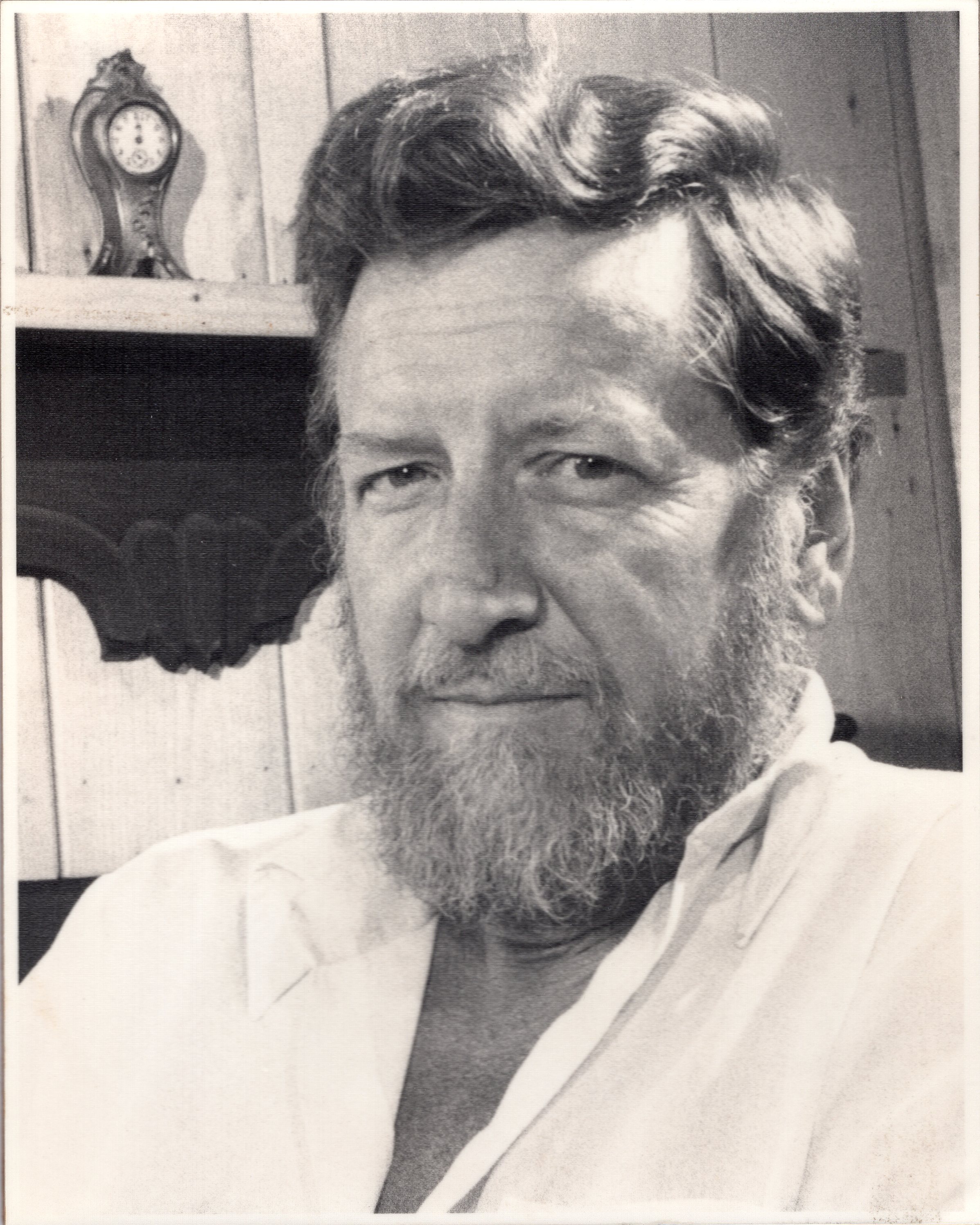
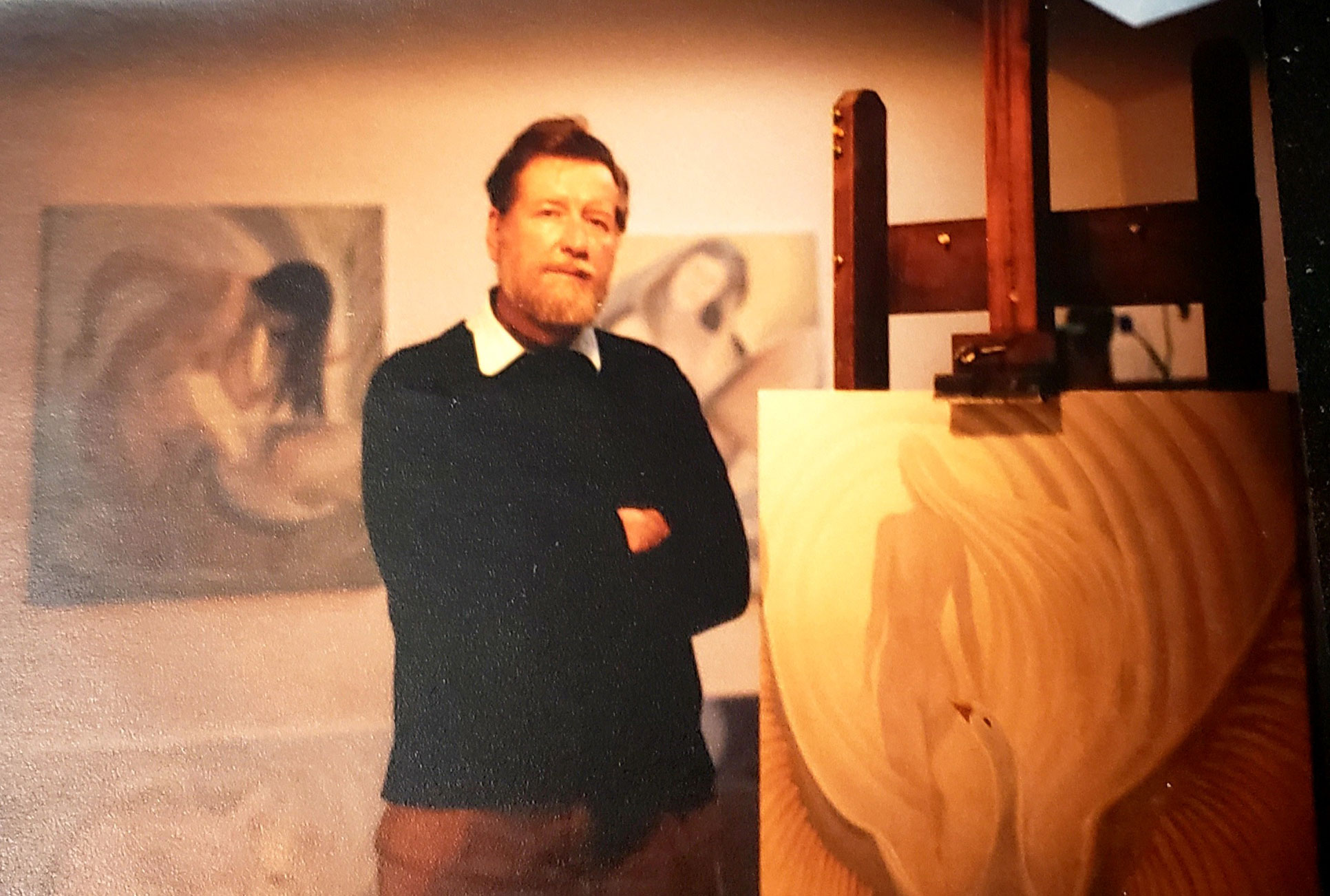
George Noseworthy in his studio
George Noseworthy in studioArchive image (1977).

Legacy at a glance

A quick overview.

460

Oil paintings documented in the studio archive.

1000+

Additional works across studies, drawings, designs, and archival material.

32

Exhibitions and public presentations across his career.

1970

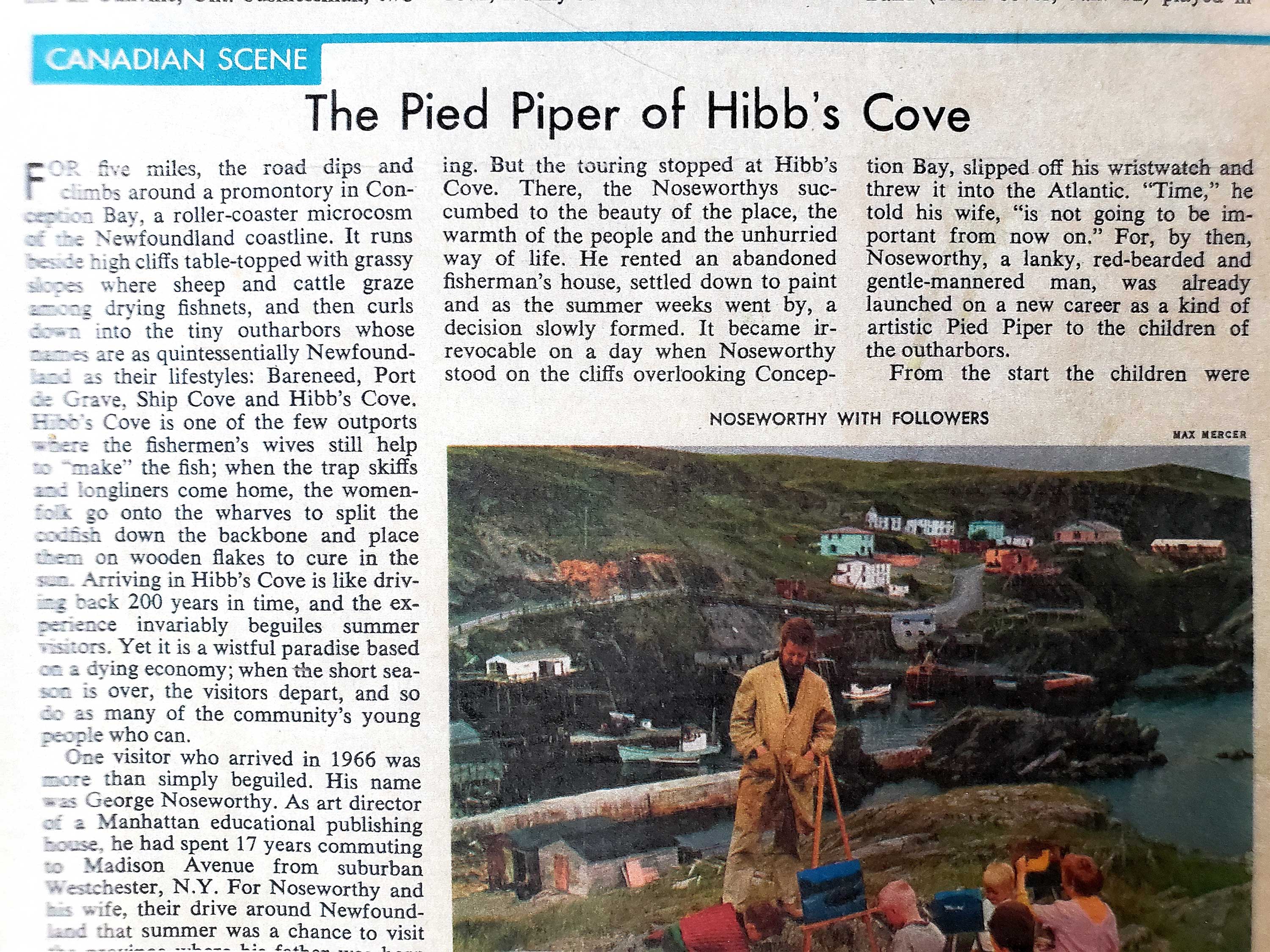
Referred to by Time as "The Pied Piper of Hibb's Cove."

Legacy overview

Prepared for gallery review.

George Noseworthy was born in 1929 and raised on the shore of Long Island Sound in New York. He began drawing and painting at the age of eight, later graduating in the top ten of his class from New York State University Institute of Applied Arts & Sciences before studying at the Art Students League in New York.

He worked for major advertising agencies and publishers, moved among figures such as Andy Warhol, Norman Rockwell, and Truman Capote, and built a successful twenty-one-year career in advertising, ultimately serving as art director with Scholastic Magazine before leaving in 1967.

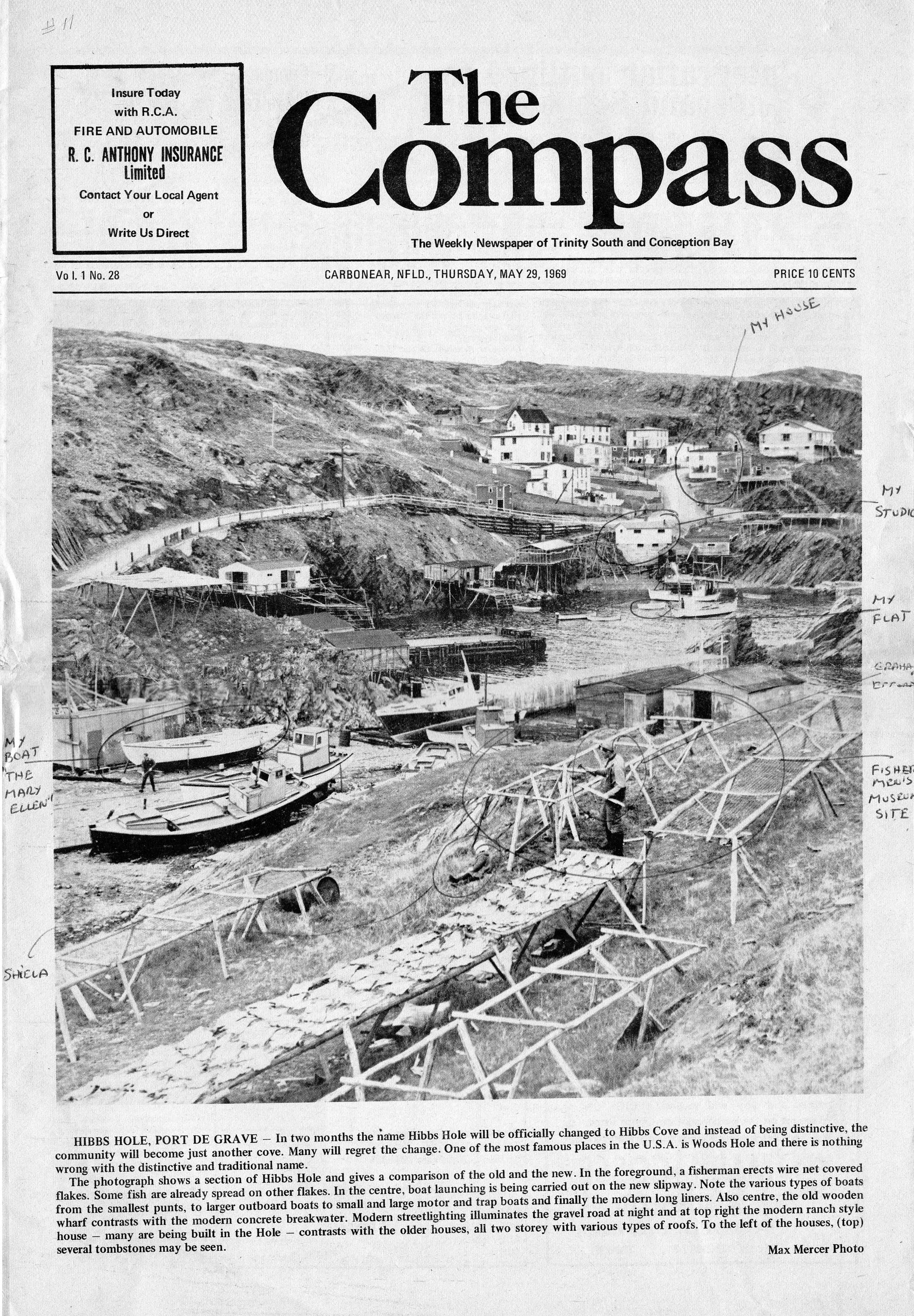
Born of Newfoundland parents, he settled in Hibb's Hole, Newfoundland in 1967 to rediscover his heritage and devote himself to painting. This became the decisive turn: the commercial art director became a coastal painter, educator, local organizer, and interpreter of Newfoundland's elemental character.

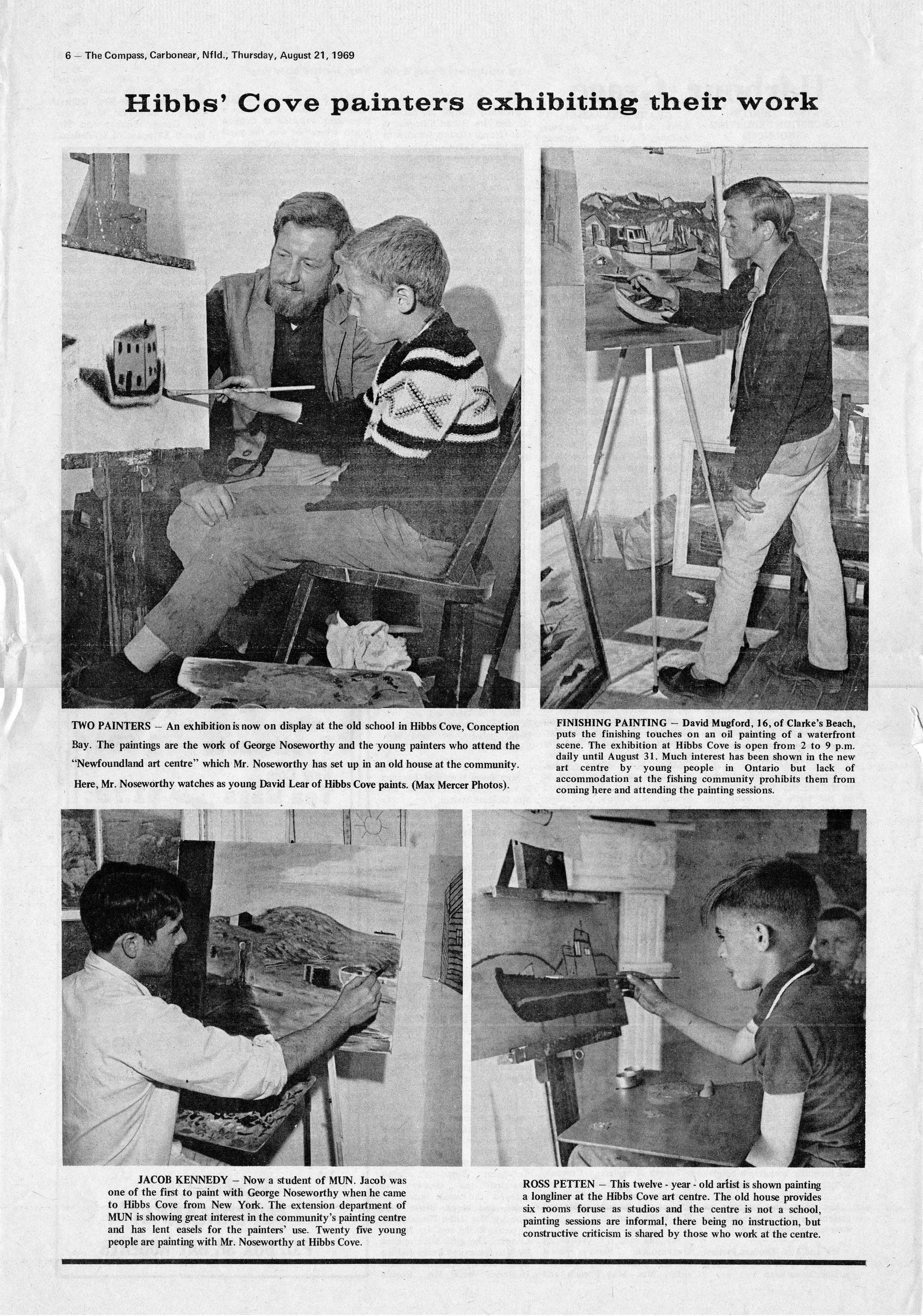
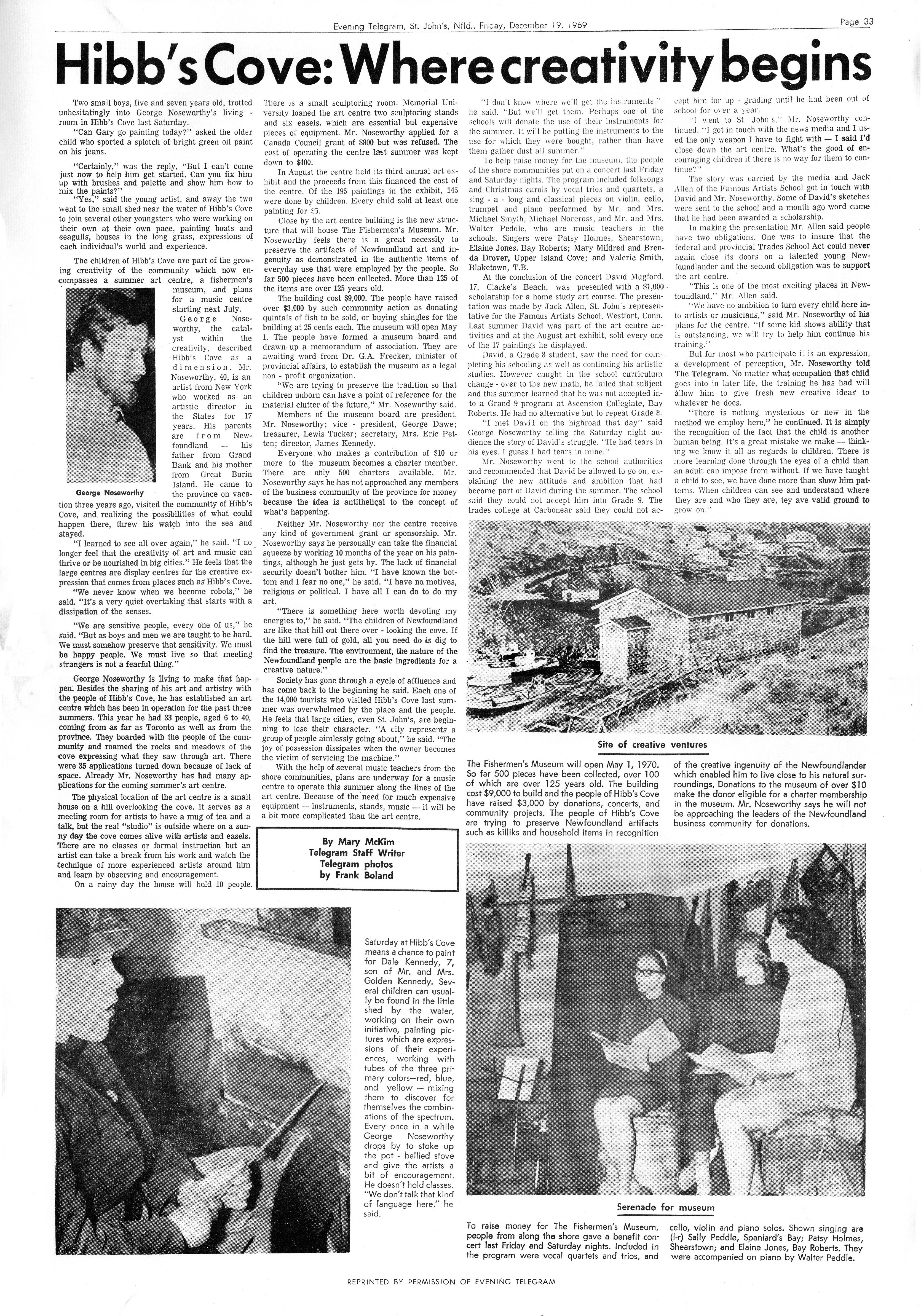
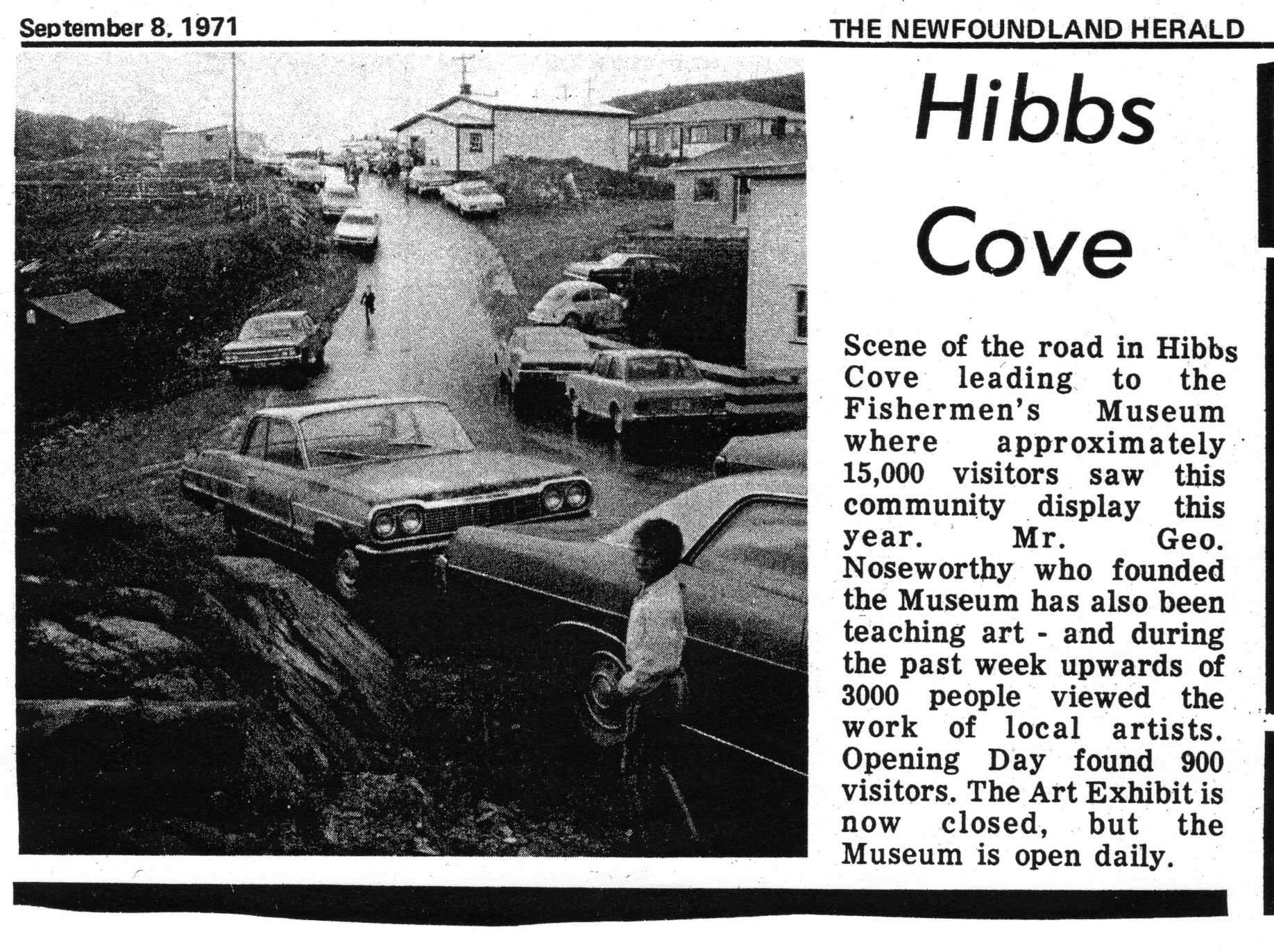
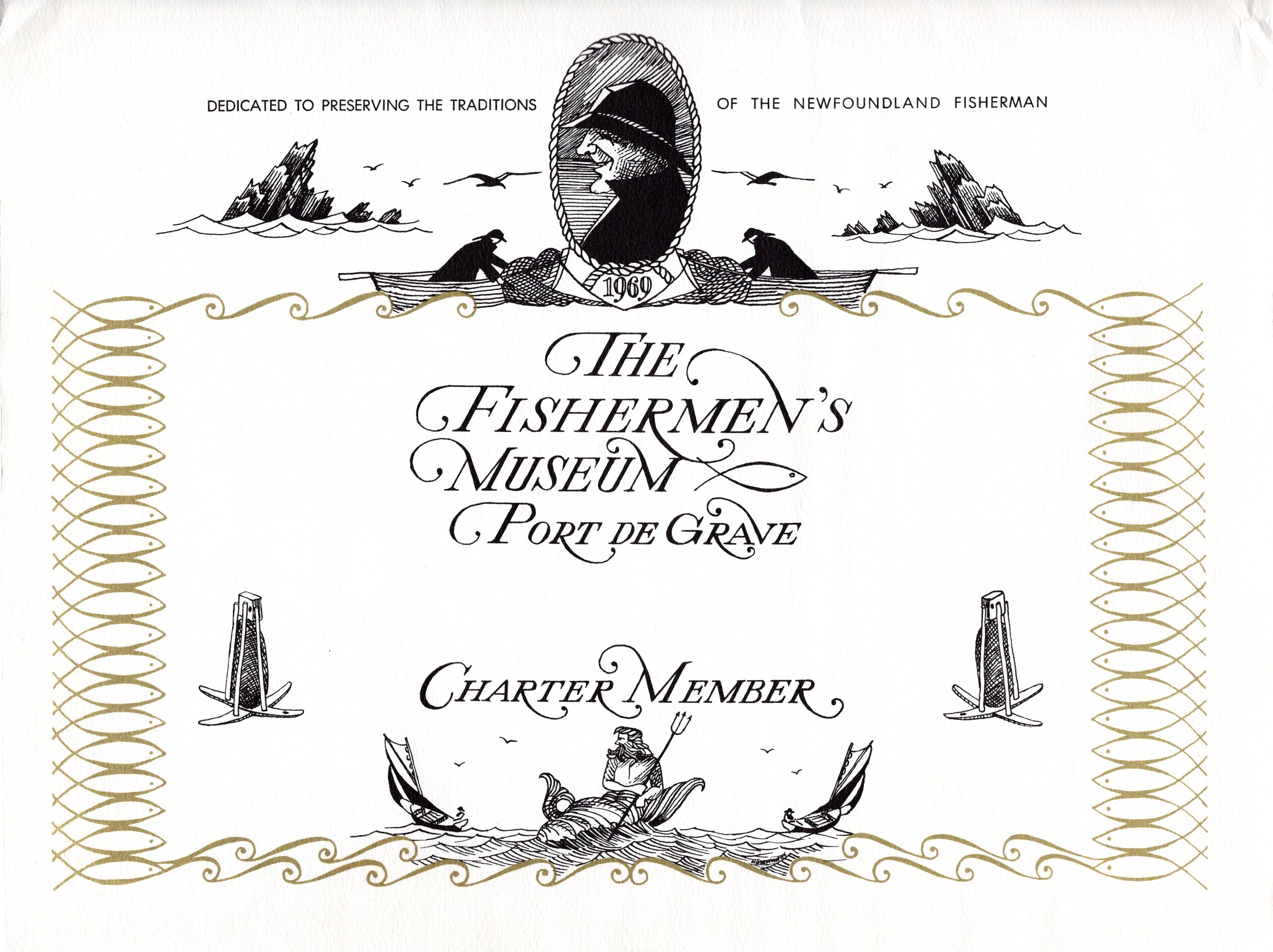
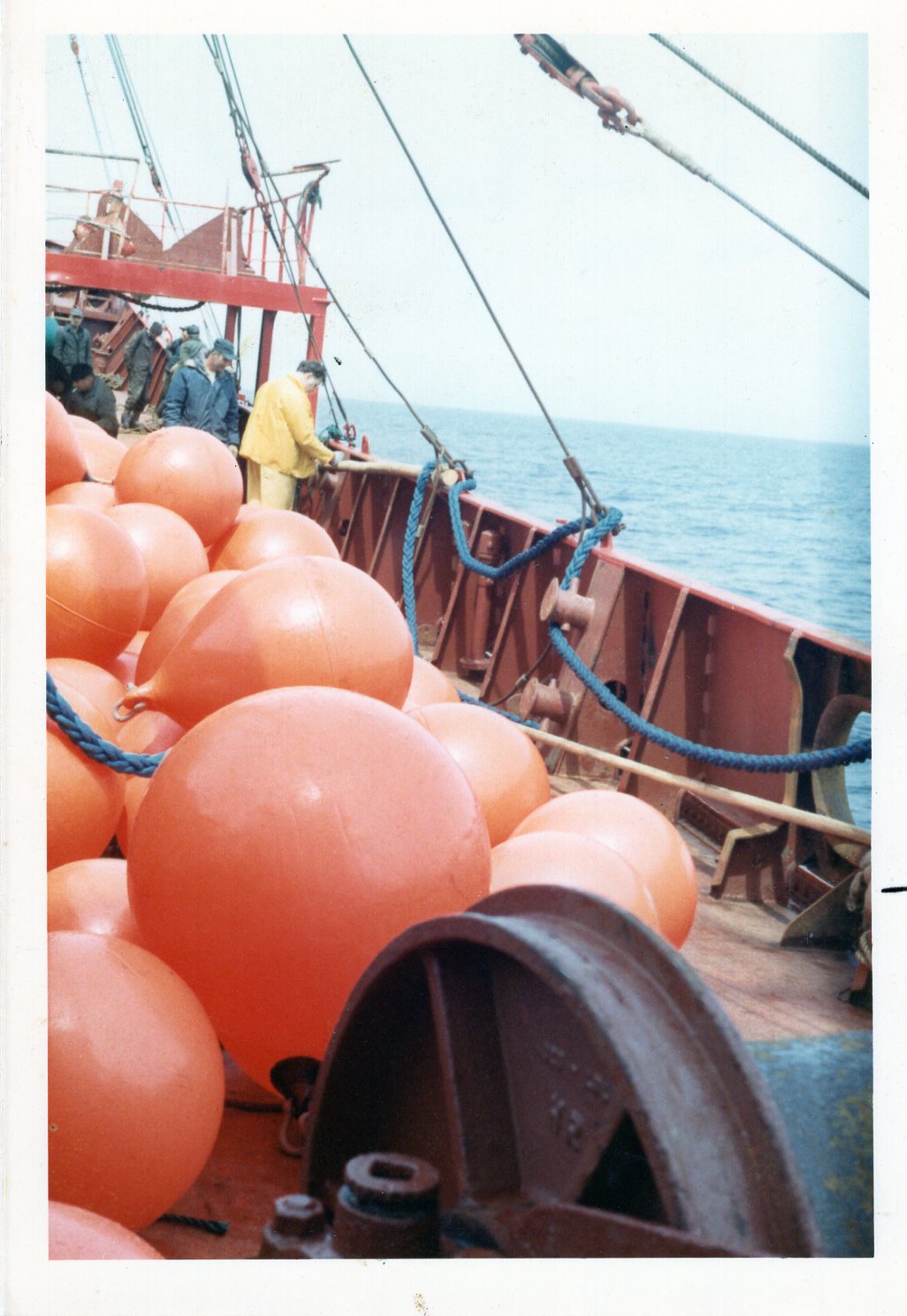
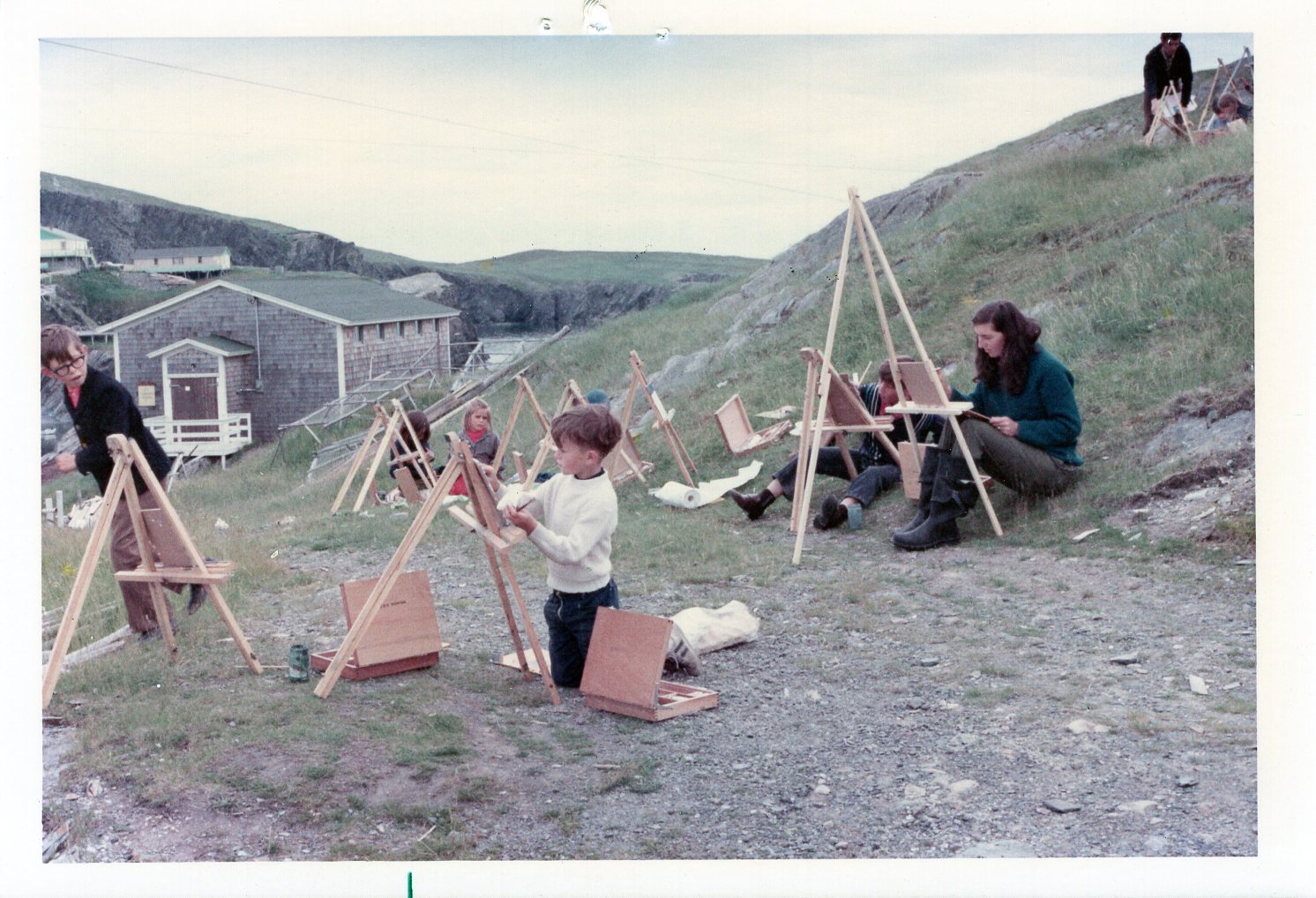
In 1968, his creative efforts helped found the first Fisherman's Museum and Children's Art Centre outside St. John's. In 1970, he was invited by the Newfoundland government to attend the annual Seal Hunt, where he completed 33 oil paintings.

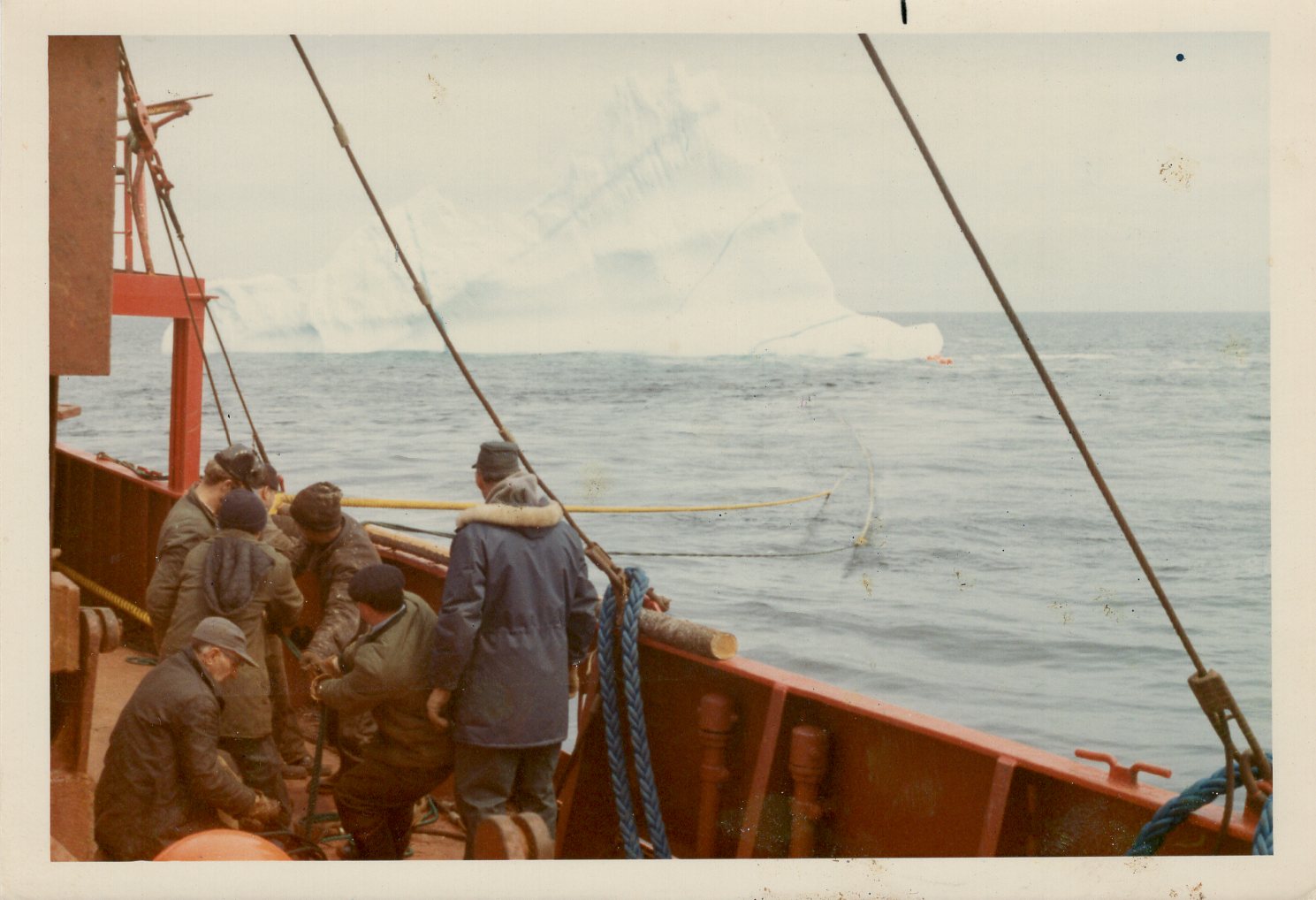
In 1971, George participated in Memorial University's Iceberg Towing Expedition and completed fifteen oil paintings, with some works entering the university's permanent collection. His remaining work exists in private and public collections across Canada, the United States, Great Britain, Europe, and Japan.

"Newfoundland Rhythmics visually express the energy that appears in and around objects or forms that occupy a space which would otherwise be a vacuum. The "Rhythmic" forces coming from - going through - and going on - is the acceptance of infinity, where there is no beginning and no end."
Timeline

Key biographical and institutional markers.

1929

Born and raised along Long Island Sound, New York, to Newfoundland parents.

1950s

New York formation. Formal training, the Art Students League, commercial art, publishing, and contact with major cultural figures.

1967

Return to Newfoundland roots. Leaves a twenty-one-year advertising career and settles in Hibb's Hole to pursue painting more fully.

1968

Public cultural work. Helps found the Fisherman's Museum and Children's Art Centre outside St. John's.

1970

Seal Hunt paintings. Invited by the Newfoundland government to attend the annual Seal Hunt, completing 33 oil paintings.

1971

Iceberg Towing Expedition. Participates in Memorial University's expedition and completes fifteen oil paintings.

1985

Final chapter. George passes away suddenly on September 14, 1985, at age 56. His ashes were scattered into the sea from the cliffside beside his studio.

Archival documents and photographs

Click any item to enlarge.

Selected paintings for gallery review

Newfoundland, vision, and rhythmic form.

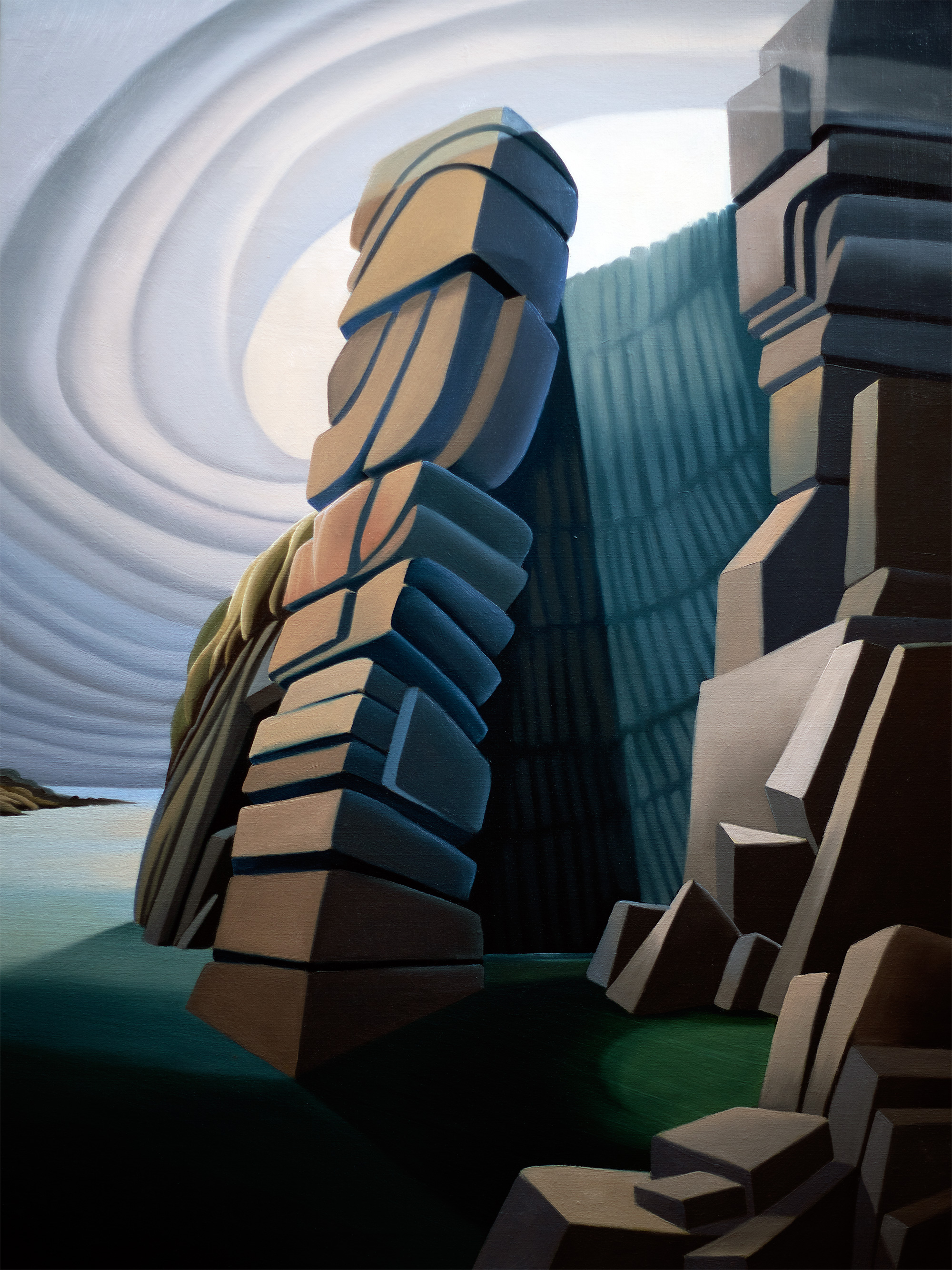
These eight paintings present the wide creative arc of George's work - they reveal a mature visual language where Newfoundland's cliffs, harbours and natural forces are transformed into rhythmic flow.

The selection begins with a coastal monument, moves through harbour and iceberg imagery, and opens into the visionary work that gives the selection more range than most contemporaries.

8curated works for review
Oillinen and masonite supports
Locationrooted in Newfoundland memory
02
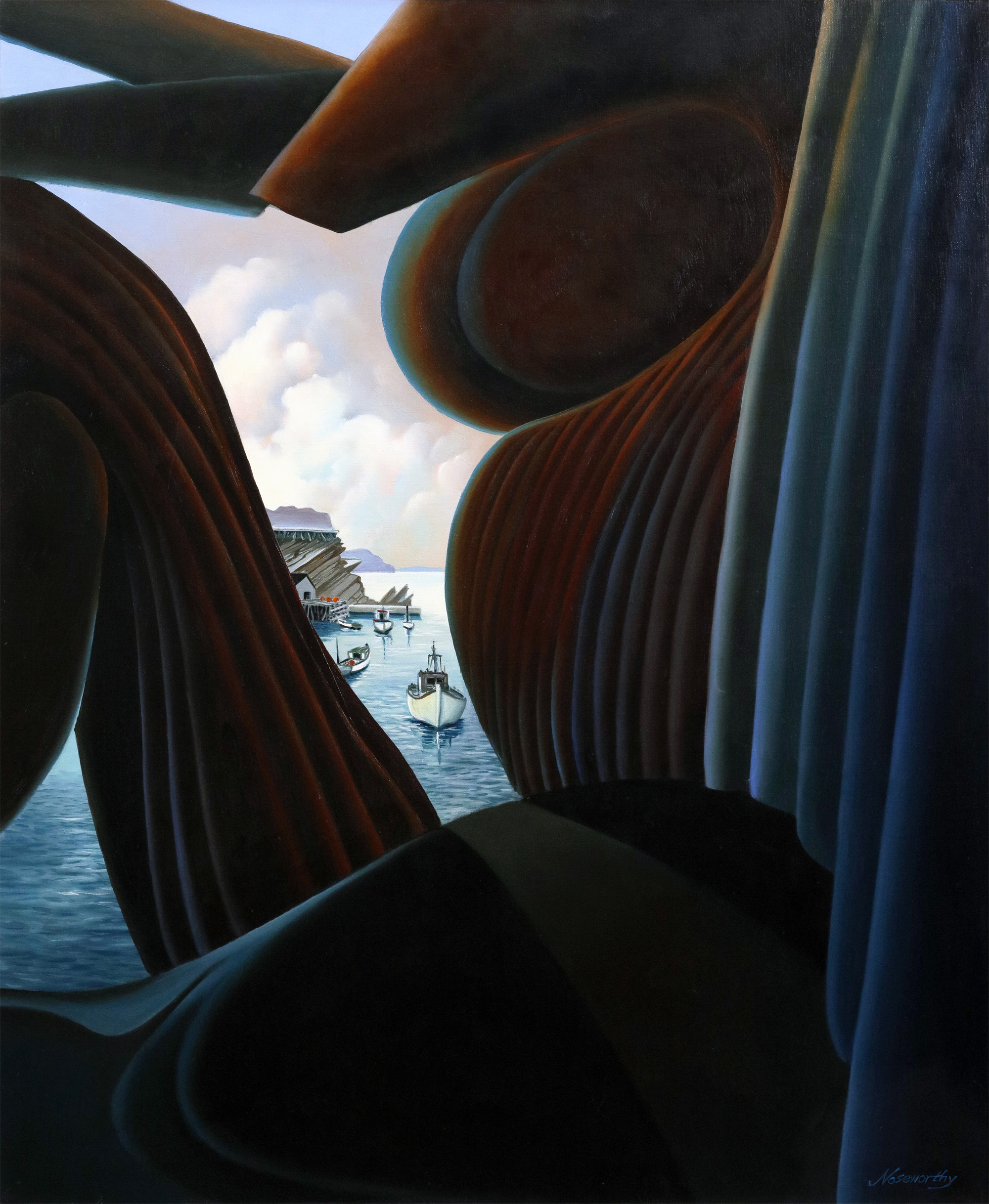
Port de Grave by George Noseworthy

Harbour through abstraction

Port de Grave Harbour

Oil on linen · 30 × 36 inches (76.2 × 91.4 cm)

A harbour scene seen through ribbed, sheltering forms. The boats and water remain recognizable, but the surrounding dark architecture turns memory into a stage.

harbourboatscompressed view
03
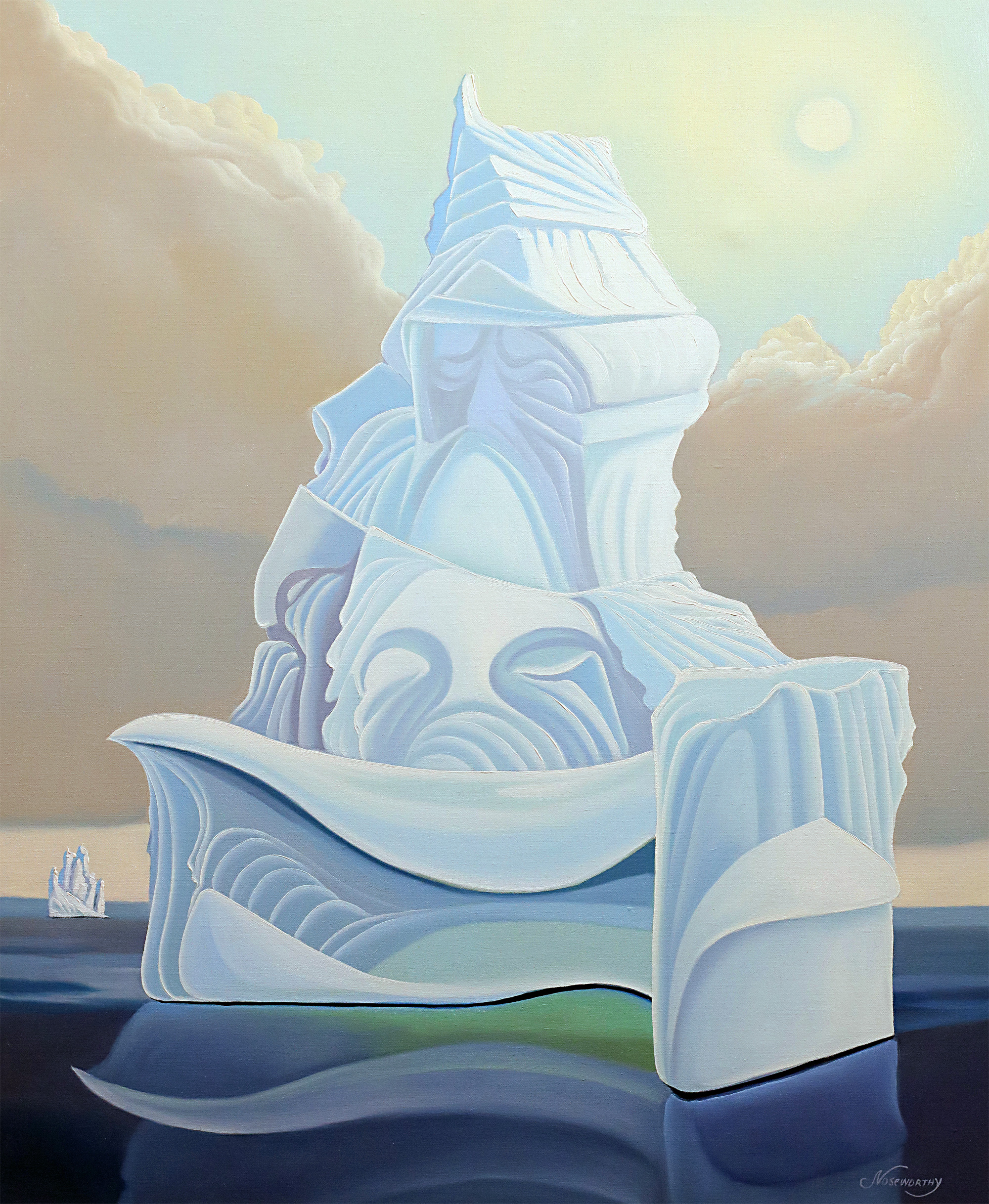
Neptune in Ice by George Noseworthy

A sleeping deity frozen in time

Neptune in Ice

Oil on linen · 30 × 36 inches (76.2 × 91.4 cm)

A pale iceberg becomes vessel, monument, mask, and sea-god. This work ties directly into George's iceberg imagination and his ability to make landscape feel mythic without losing its coastal origin.

icebergmythic formsea presence
04
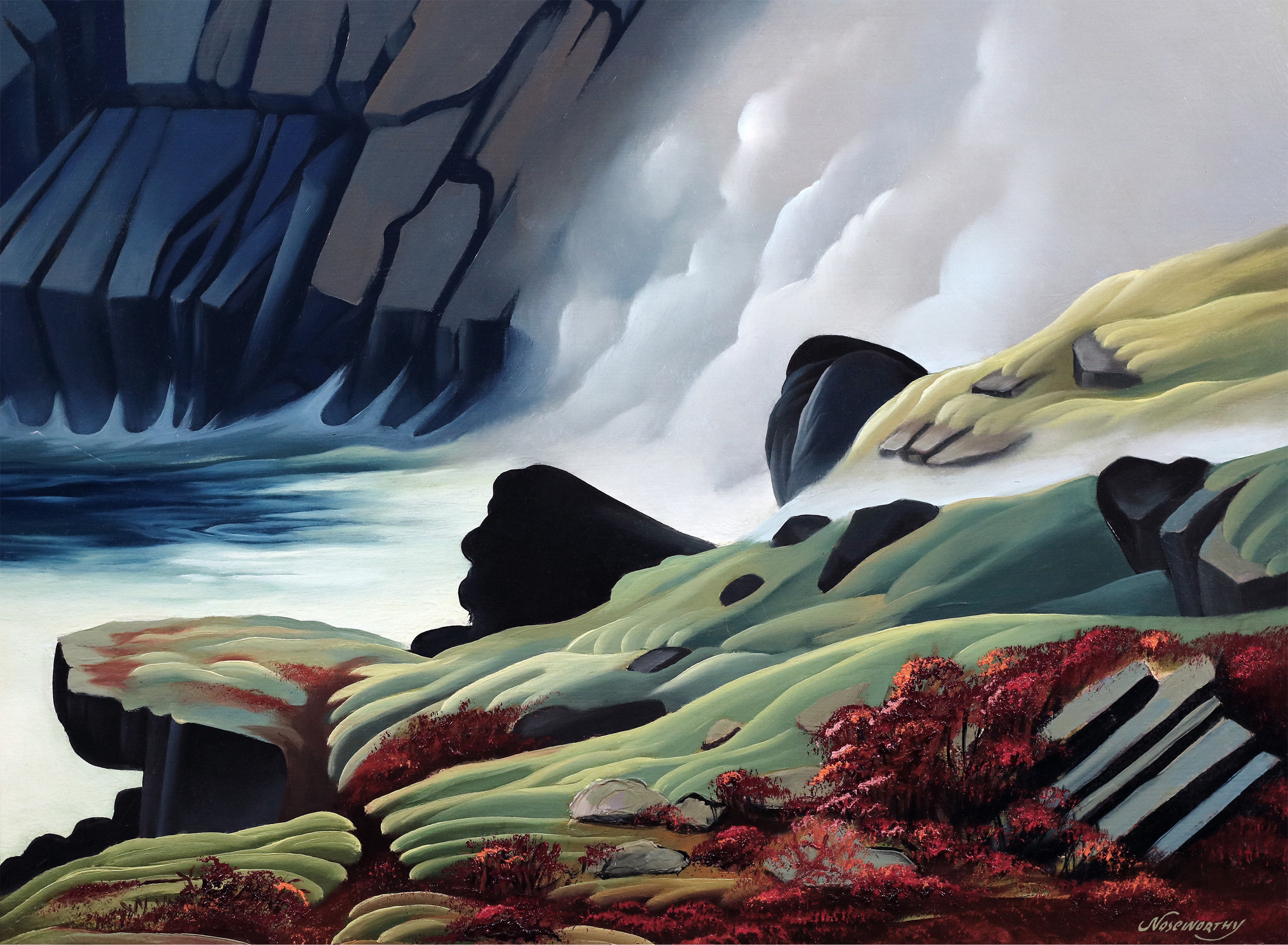
Fishing Point by George Noseworthy

Sea mist combined with cliffside anchor

Fishing Point

Oil on masonite · 20 × 16 inches (50.8 × 40.6 cm)

One of the clearest bridges between Newfoundland landscape and George's rhythmic abstraction: red scrub, green landforms, dark rock, and sea mist held in a taut coastal atmosphere.

coastal landscapered barrensplace-based abstraction
06
Halley's Farewell by George Noseworthy

Cosmic Newfoundland

Halley's Farewell

Oil on linen · 30 x 36 inches (76.2 × 91.4 cm)

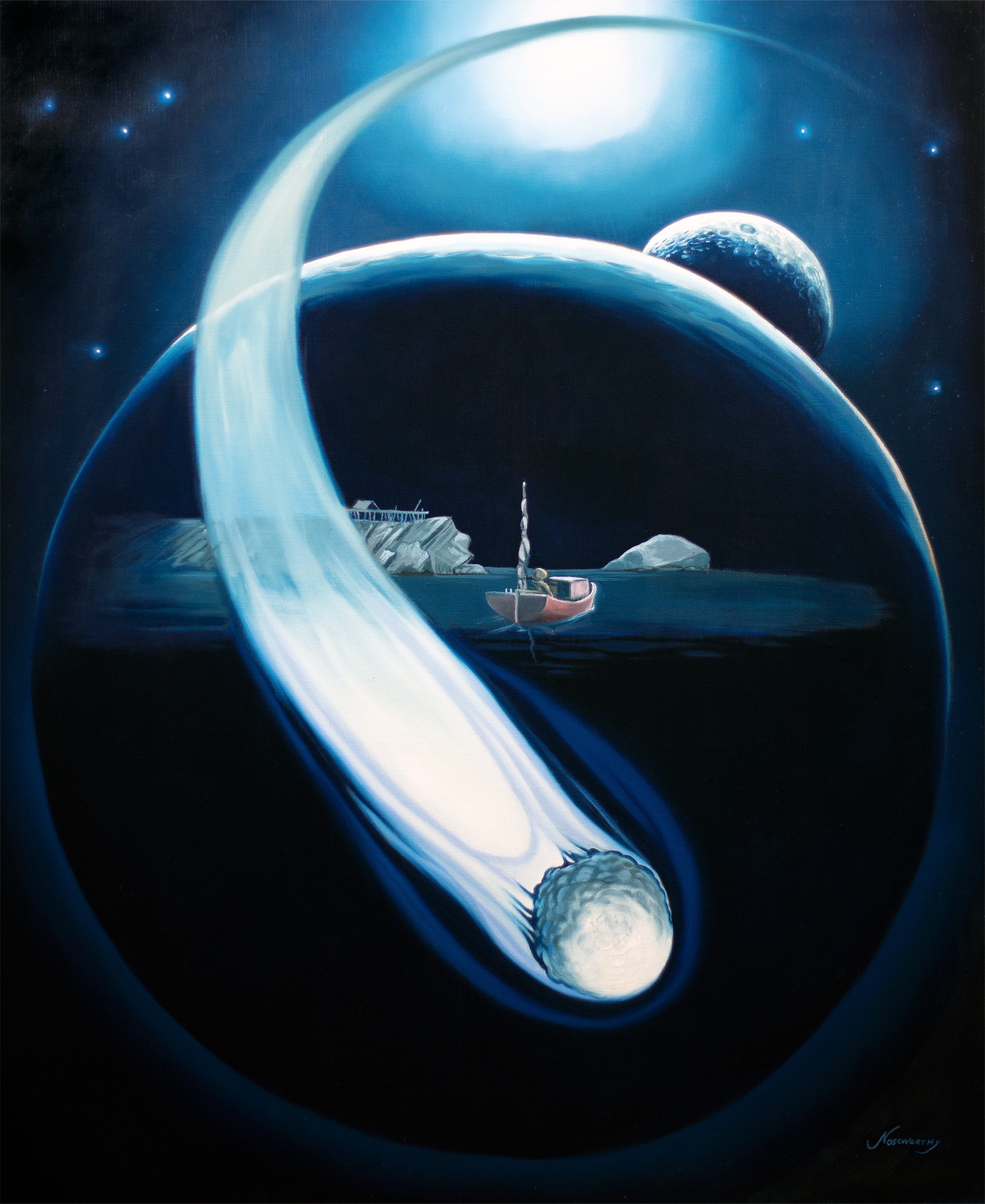
A comet arcs through night around a small boat, iceberg, and moonlit shore. The painting shows George's gift for making cosmic event and local coast occupy the same imaginative field.

1985 Halley's Comet approachHibb's Cove settingnight sea
07
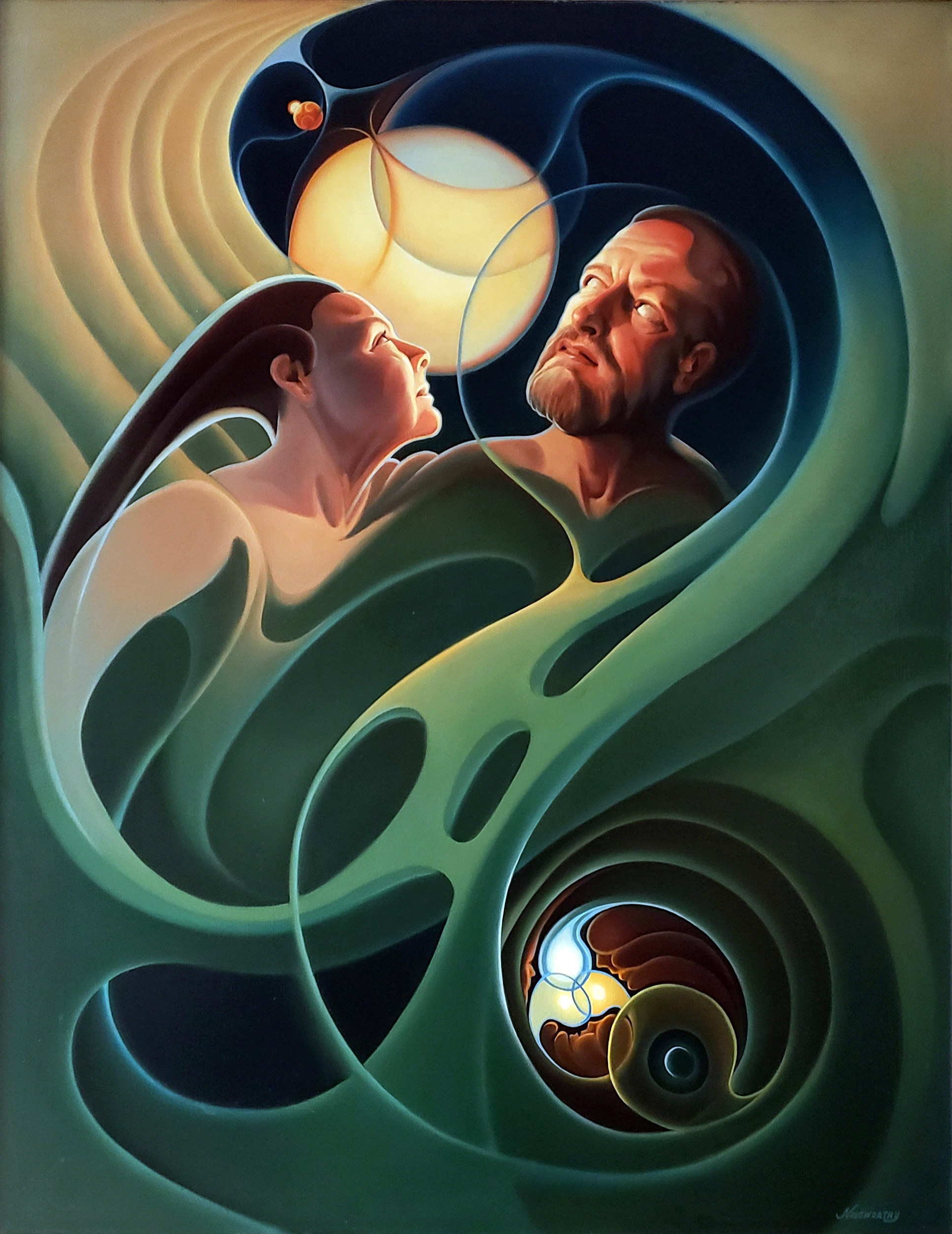
Magnetic Captive by George Noseworthy

Metaphysical and existential

Magnetic Captive

Oil on linen · 36 × 30 inches (91.4 × 76.2 cm)

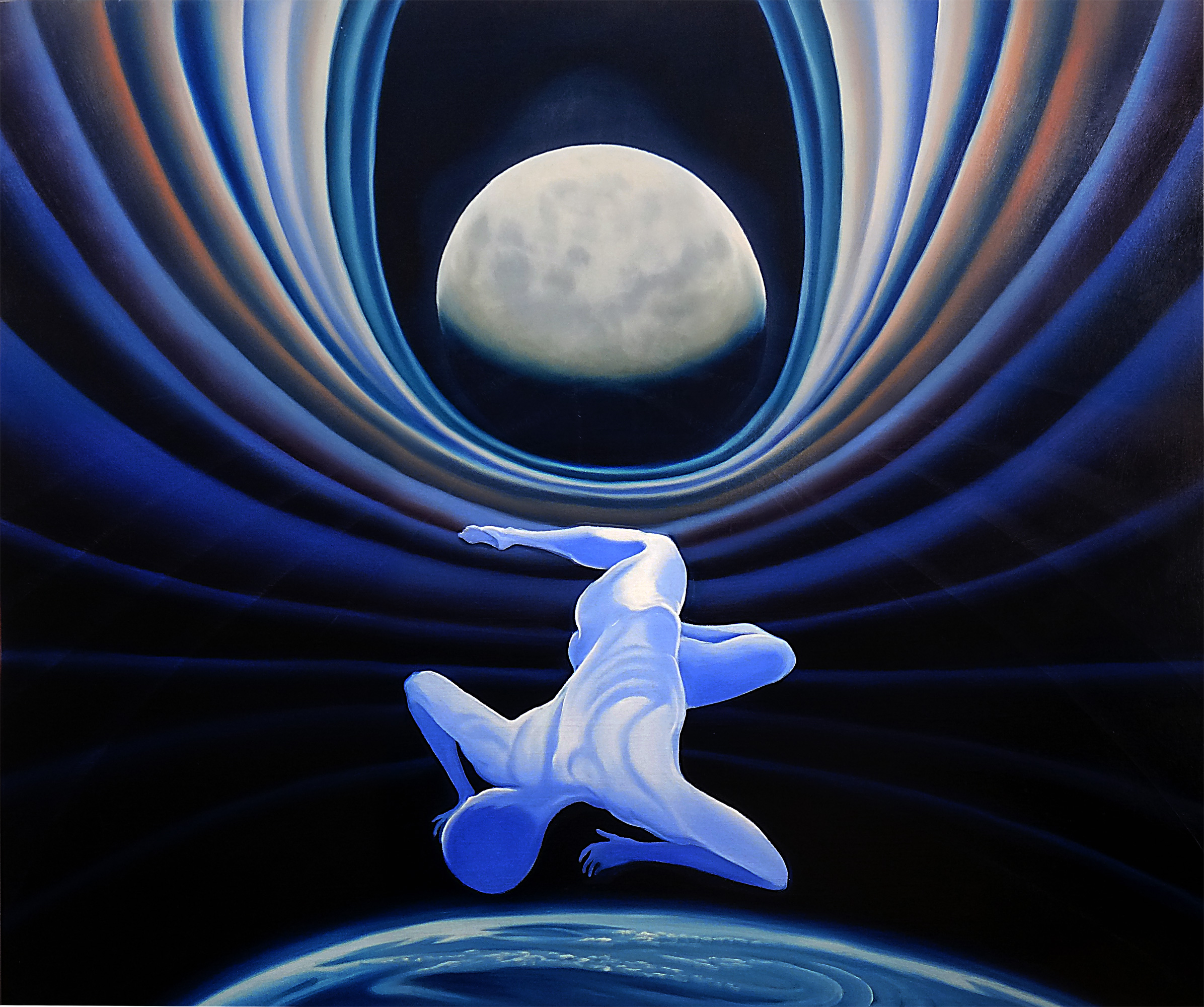
A luminous body suspended beneath a moonlike force, surrounded by bands of dark energy. It is one of the stranger and more memorable works in the group, a nocturne of pull, gravity, and surrender.

figurelunar fieldenergy bands
08
Rhapsody of the Brook by George Noseworthy

A lyrical closing note

Rhapsody of the Brook

Oil on linen · 30 × 36 inches (76.2 × 91.4 cm)

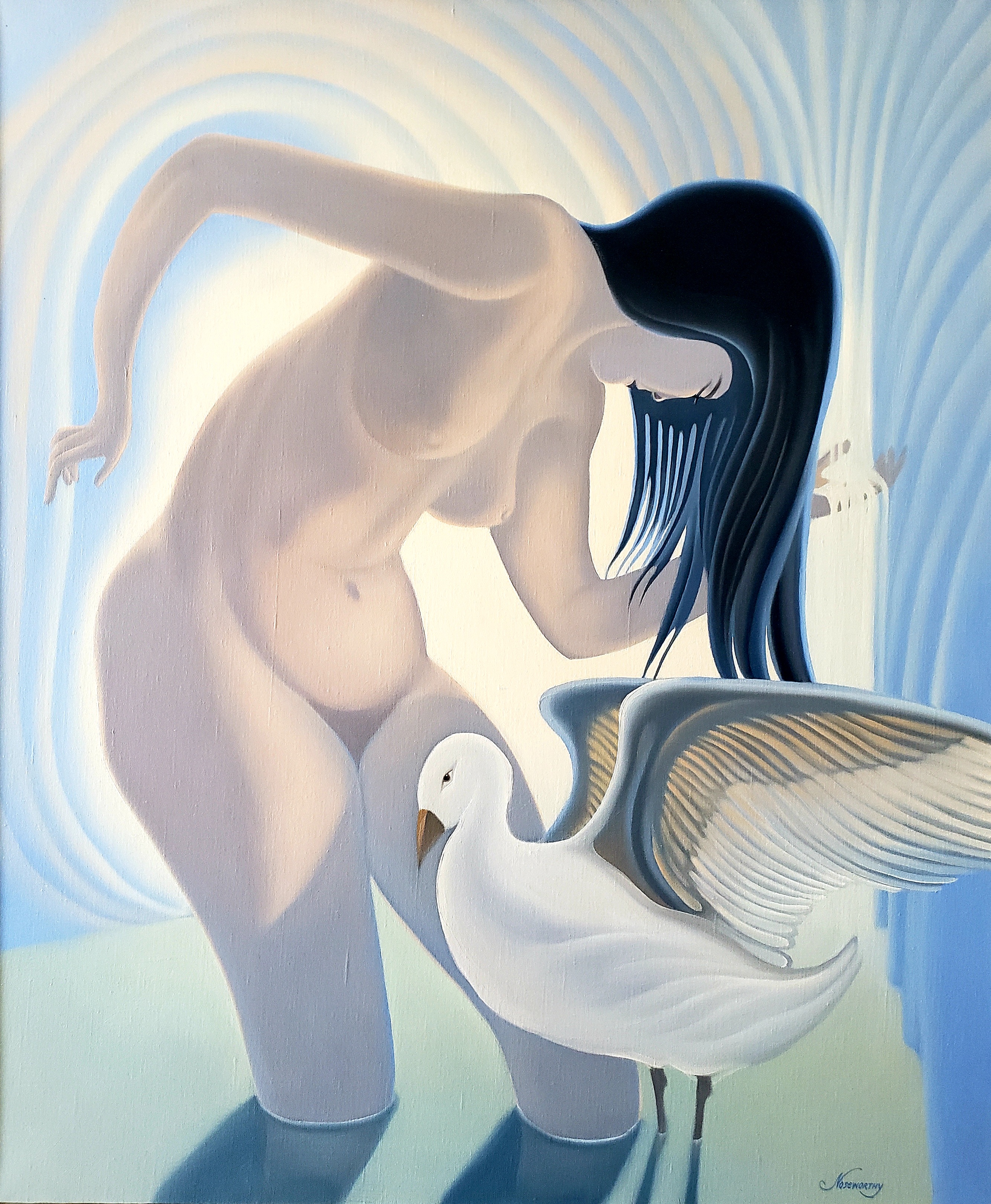
A softer, lyrical counterpoint to the coastal and cosmic works. Figure, swan, cascading water, and blue rhythmic fields create an intimate image of movement, tenderness, and transformation.

nude seriesswan formlyrical rhythm
Condition & Presentation: The works shown here have remained in the care of the George Noseworthy family archive for approximately forty years. They have been protected, preserved, and maintained as complete gallery ready works, with several works retaining distinctive metallic or period frames that form part of their visual presence.
Curatorial framing: Presented together, these works argue for George Noseworthy as a distinct Newfoundland-rooted modernist whose paintings moved from coast and harbour into myth, energy, and cosmology, and whose body of work deserves renewed consideration within the contemporary art conversation in Newfoundland and Canada.

Inquiries

Prepared from the George Noseworthy studio archive

For gallery review, exhibition discussion, or selected work inquiries:

James Noseworthy
Cliffwind Studio
Winterport, Maine